Mangal dosha: how to check your own kundali, and when it cancels
Which houses of Mars count as Mangal dosha, why you must check from lagna, Moon and Venus, the accepted cancellations, and what the dosha does not mean.
Mangal dosha, also called Kuja dosha or Bhauma dosha, is present when Mars sits in the 1st, 2nd, 4th, 7th, 8th or 12th house of a kundali, and it is checked not once but three times: from the lagna, from the Moon and from Venus. Drik Panchang’s rule is that a person is non-Manglik only if none of the three charts is afflicted. Even then, by the same source’s estimate, most charts that show the dosha also show a combination that cancels or softens it.
That last sentence is the one to hold on to. “Manglik” is treated in many families as a verdict. In the classical method it is a flag that tells the astrologer to look closer, and more often than not the closer look removes the flag.
Why these six houses?
Mars is heat, haste and conflict. The houses it affects in the Manglik rule are the ones that touch married life directly or sit next to it:
- 1st house: the self and temperament; Mars here makes a person quick and forceful, and the 1st house aspects the 7th, the house of the spouse.
- 2nd house: family and speech, the household you build and the words spoken in it.
- 4th house: home, domestic peace and the mother.
- 7th house: the partner and the marriage itself.
- 8th house: the longevity of the marriage and the mangalya of the spouse; also shared resources.
- 12th house: bed comforts, expenses and losses.
Notice what is missing. Mars in the 3rd, 5th, 6th, 9th, 10th or 11th does not produce the dosha, no matter how strong or weak it is.
The North–South difference
Here the traditions genuinely disagree. Drik Panchang notes that many North Indian astrologers leave out the 2nd house, while many South Indian astrologers leave out the 1st house, and it chooses to count both. DekhoPanchang’s module adds that South Indian practice tends to check from the lagna only, while the North Indian approach checks from lagna, Moon and Venus. So if two pandits give you different answers about the same chart, the first thing to ask is which houses and which reference points each used. They may both be right within their own school.
How to check it yourself, step by step
You need your birth chart with the lagna, the Moon and Venus marked. The AstroSimply app shows all three; so does any kundali printout.
- From the lagna. Count the house Mars occupies with the lagna as house 1. If it is 1, 2, 4, 7, 8 or 12, note “yes”.
- From the Moon. Now treat the sign holding the Moon as house 1 and count again to Mars. Note “yes” or “no”.
- From Venus. Treat the sign holding Venus as house 1 and count to Mars once more.
- Write down the sign Mars is in and which planets, if any, share the house or aspect it. You need this for the cancellation step.
If all three steps say “no”, you are not Manglik by any school. If one or more say “yes”, move to the cancellations.
The cancellations most astrologers accept
There is no single verse that lists every exception, and different lineages keep slightly different lists. The conditions below appear across the sources we checked and are the ones you are most likely to hear from a pandit:
| Condition | Why it is taken to cancel or soften the dosha |
|---|---|
| Mars in its own sign, Mesha or Vrishchika | A planet in its own house behaves with dignity rather than aggression |
| Mars in Makara, its exaltation sign | Mars is at its most disciplined |
| Jupiter aspecting Mars or the affected house | Jupiter’s aspect is the classic antidote to Mars |
| Mars conjunct a strong benefic such as Jupiter or Venus | The benefic moderates Mars |
| Venus or Jupiter in the 7th house | The marriage house itself is protected |
| Both partners Manglik | The two charts are considered balanced; the most commonly applied rule in matching |
| Mars in certain nakshatras, for example Punarvasu, Vishakha or Purva Bhadrapada | Jupiter-ruled nakshatras tone Mars down |
Drik Panchang states that it applies “the most widely accepted rules” without listing them, and grades the dosha from mild to severe. Mars alone in the 7th or 8th is graded the strongest; Mars joined by Saturn, Rahu, Ketu or the Sun in those houses is graded more severe still. This grading is useful: a mild dosha from the Venus chart alone with Jupiter’s aspect is a very different thing from Mars and Saturn together in the 7th from the lagna with no relief.
A worked example
A young man born with Simha lagna has Mars in Makara, the 6th house from the lagna. His Moon is in Mithuna, and his Venus is in Karka.
- From the lagna: Mars in the 6th. No dosha.
- From the Moon in Mithuna: count Mithuna 1, Karka 2, Simha 3, Kanya 4, Tula 5, Vrishchika 6, Dhanu 7, Makara 8. Mars is in the 8th from the Moon. Dosha present.
- From Venus in Karka: Karka 1, Simha 2, Kanya 3, Tula 4, Vrishchika 5, Dhanu 6, Makara 7. Mars is in the 7th from Venus. Dosha present.
So this chart is Manglik from the Moon and from Venus, a result a North Indian pandit would report and a lagna-only South Indian reading would miss. But Mars is in Makara, its exaltation sign, which is the first cancellation on nearly every list. If Jupiter also aspects Mars, most astrologers would call the dosha cancelled or mild. The honest summary for this family is: “technically present from two reference points, substantially relieved by exaltation; match him with care but do not reject proposals on this ground alone.” That is a very different conversation from “he is Manglik, find a Manglik girl”.
What Mangal dosha does not mean
The popular version of this dosha carries frightening claims about what happens to the spouse of a Manglik. Classical practice is much more measured: the dosha speaks of friction, delay, heated arguments and mismatched temperaments, and it is read alongside the strength of the 7th house, its lord, Venus and the running dasha. A single placement of Mars never decides a marriage on its own, and it predicts nothing about anyone’s lifespan. If someone tells you otherwise, ask them to show you the chart factors beyond Mars.
Two more claims are worth clearing up:
- “The dosha goes away after 28.” DekhoPanchang’s module points out that this has no basis in the classical texts. What does happen is that people marry later, when a Mars dasha may have passed or the person has matured, which looks like the dosha “expiring”.
- “A Manglik can only marry a Manglik.” Mutual dosha is one cancellation among several. A non-Manglik partner whose 7th house holds Jupiter or Venus, or whose own Mars is well placed, is also considered a balanced match by many astrologers.
Remedies, kept simple
Where a dosha is found and not cancelled, traditional practice offers simple, optional remedies: fasting or a light meal on Tuesdays, reciting the Hanuman Chalisa, and donating red lentils or jaggery. Some families perform a Kumbh Vivah, a symbolic first marriage to a pot or a tulsi plant, before the real wedding; it is a custom some communities keep, not a requirement. No paid ritual and no coral ring is necessary for a marriage to succeed, and a good astrologer will say so.
Frequently asked questions
My pandit says I am Manglik but the app says I am not. Who is right?
Possibly both. Ask your pandit which houses (with or without the 2nd and 1st) and which reference points (lagna only, or also Moon and Venus) were used, and whether cancellations were applied. Most disagreements dissolve at that point. If the pandit used lagna, Moon and Venus with no cancellations, and the app applied cancellations, the “no” is the more complete answer.
Does Mangal dosha matter for a love marriage?
The chart is the same whether the match is arranged or chosen, so the placement is what it is. In practice, couples who already know each other well have evidence about temperament and conflict that no single placement can outweigh. Look at the dosha as a note about where arguments may come from, and match it against what you already know.
Should both charts be checked for Mangal dosha during kundali matching?
Yes. The ashtakoot points system that produces the “gunas” does not include Mangal dosha, so it is assessed separately for both the bride and the groom. Many astrologers reduce or qualify a good guna score when one chart has an uncancelled dosha and the other has none. Our post on kundali matching and the 36 gunas covers how the two checks fit together.
Sources
Read next
Kundali matching: what the 36 gunas measure and how many are enough
The eight kootas behind the 36-point gun milan score, why 18 is the usual cut-off, and why a high total can still fail on Nadi or Bhakoot dosha.
What is a kundali? A plain-language guide to your birth chart
Lagna, houses, grahas and nakshatras — what a Vedic birth chart actually contains, why birth time matters, and what a kundali can and cannot tell you.
Rahu kaal: how it is calculated for your city, and what it is for
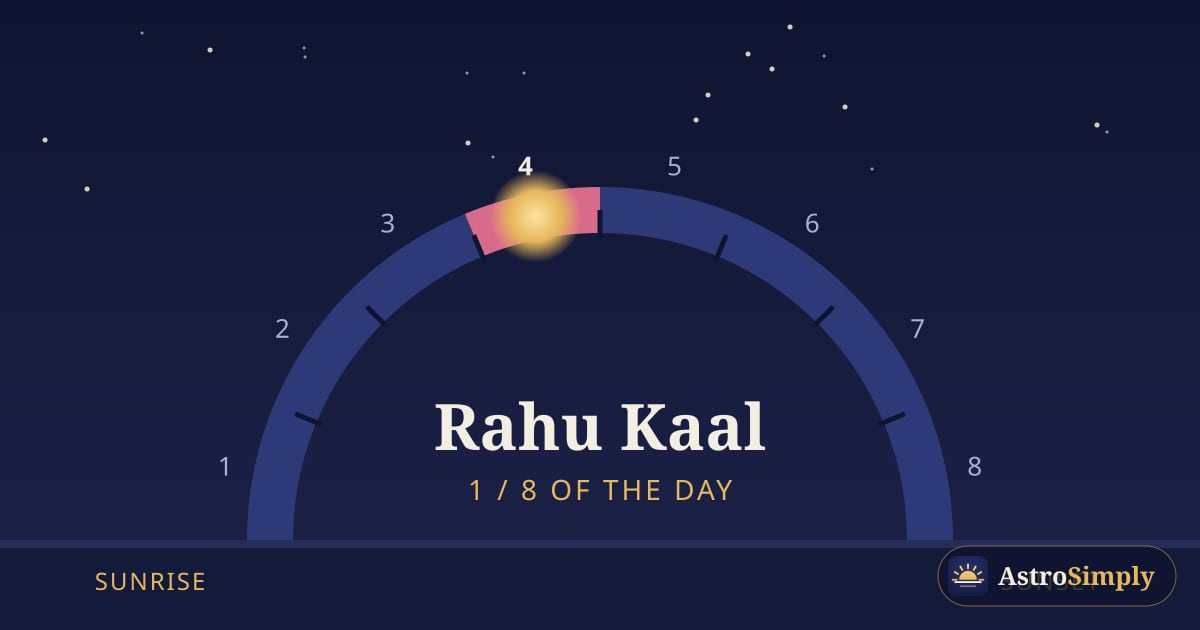
Rahu kaal is one eighth of the daylight, chosen by the weekday. The arithmetic with a real day, the weekday table, where it comes from, what it doesn't stop.