What is a kundali? A plain-language guide to your birth chart
Lagna, houses, grahas and nakshatras — what a Vedic birth chart actually contains, why birth time matters, and what a kundali can and cannot tell you.
A kundali (also called janam kundali or janma patrika) is a map of the sky at the exact moment and place you were born. It records where the Sun, the Moon and the planets were, against the background of the zodiac, as seen from your birthplace. Everything else in Vedic astrology — your rashi, your dasha periods, kundali matching, daily transits — is read from this one map.
It looks like a square full of numbers and abbreviations, but it is built from just four ingredients.
1. The twelve signs (rashis)
The sky around the Earth is divided into twelve equal parts of 30° each: Mesha, Vrishabha, Mithuna, Karka, Simha, Kanya, Tula, Vrishchika, Dhanu, Makara, Kumbha and Meena. In a North Indian chart you will see these as the numbers 1 to 12 (1 = Mesha, 12 = Meena).
Vedic astrology uses the sidereal zodiac, which is tied to the fixed stars. Western astrology uses the tropical zodiac, tied to the seasons. Today the two differ by about 24° (this difference is called the ayanamsa). That is why many people find their Vedic Sun sign is one sign “behind” the Western one they read in magazines.
2. The nine grahas
A kundali places nine grahas: Surya (Sun), Chandra (Moon), Mangal (Mars), Budh (Mercury), Guru (Jupiter), Shukra (Venus), Shani (Saturn), and the two lunar nodes, Rahu and Ketu. Rahu and Ketu are not physical bodies — they are the points where the Moon’s path crosses the Sun’s path — but they are treated as grahas because eclipses happen there.
3. The lagna and the twelve houses
The lagna (ascendant) is the sign that was rising on the eastern horizon when you were born. It becomes your first house, and the remaining eleven signs follow in order as houses two to twelve. Each house (bhava) looks after an area of life:
| House | Main themes |
|---|---|
| 1st | You — body, temperament, overall direction |
| 2nd | Family, savings, speech, food |
| 3rd | Courage, effort, siblings, short journeys |
| 4th | Home, mother, comforts, inner peace |
| 5th | Children, learning, creativity, devotion |
| 6th | Daily work, service, competition, routines |
| 7th | Marriage, partnerships, business dealings |
| 8th | Sudden changes, research, hidden matters |
| 9th | Dharma, father, teachers, fortune, long journeys |
| 10th | Career, status, public life |
| 11th | Gains, friends, networks, wishes fulfilled |
| 12th | Expenses, foreign lands, rest, spiritual release |
Because the Earth turns, a new sign rises roughly every two hours. Two babies born in the same city on the same day, three hours apart, will usually have different lagnas — and so the same planet will fall in different houses for them. This is why an accurate birth time matters so much. If your time is only approximate (“early morning”), the lagna and houses may be uncertain, even though the Moon sign is usually still correct.
4. The nakshatras
On top of the twelve signs sits a finer division: 27 nakshatras (lunar mansions) of 13°20’ each, from Ashwini to Revati. Each nakshatra has four padas (quarters) of 3°20’. The nakshatra your Moon was in — your janma nakshatra — is especially important: it sets the starting point of your Vimshottari dasha, is used for choosing the first syllable of a baby’s name, and is a key input in kundali matching.
North Indian and South Indian charts
The same data can be drawn in two styles. The North Indian chart is a square with diagonals: the houses stay fixed (the top diamond is always the 1st house) and sign numbers move. The South Indian chart is a grid where the signs stay fixed and the lagna is marked. Neither is more correct; it is only a matter of what your family pandit used. AstroSimply shows both.
How a kundali is calculated
To build a chart you need three things: date of birth, time of birth and place of birth (for latitude, longitude and time zone). From these, an ephemeris — a precise table of planetary positions — gives each graha’s longitude, and the lagna is computed from local sidereal time.
AstroSimply uses the Swiss Ephemeris, the same astronomical engine used by professional astrology software, accurate to a fraction of an arc-second. Our AI guide never calculates positions itself; it only explains the chart the engine produces, and it cites the classical rule behind each statement so you can see the reasoning.
What a kundali can — and cannot — tell you
A kundali is best used as a mirror: a way to reflect on your temperament, your strengths, the kind of work and relationships that suit you, and the broad seasons of your life. Classical texts describe tendencies, not fixed outcomes, and the same placement can play out very differently depending on the rest of the chart and on the choices a person makes.
A kundali should never replace a doctor, a lawyer or a financial adviser. Be cautious of anyone who uses a chart to frighten you, to predict illness or death, or to sell expensive “remedies” urgently. Good astrology leaves you calmer and clearer, not anxious.
Try it: open the app, add your birth details, and look at your lagna, your Moon sign and your current dasha. Those three facts are the foundation of everything else.
Read next
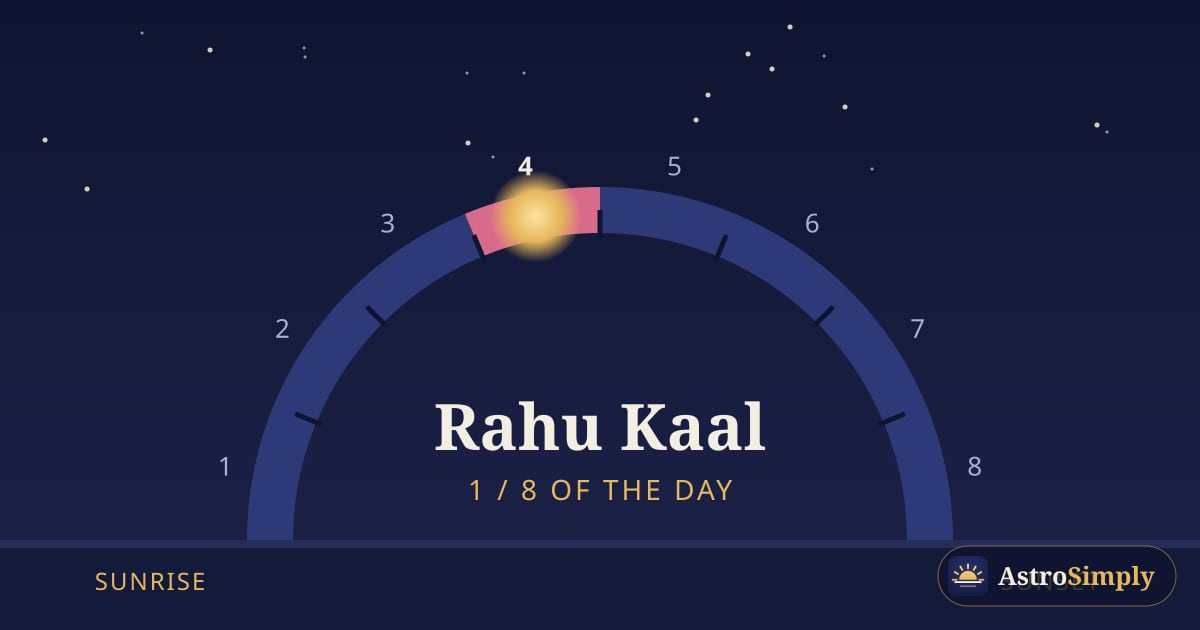
Rahu kaal: how it is calculated for your city, and what it is for
Rahu kaal is one eighth of the daylight, chosen by the weekday. The arithmetic with a real day, the weekday table, where it comes from, what it doesn't stop.
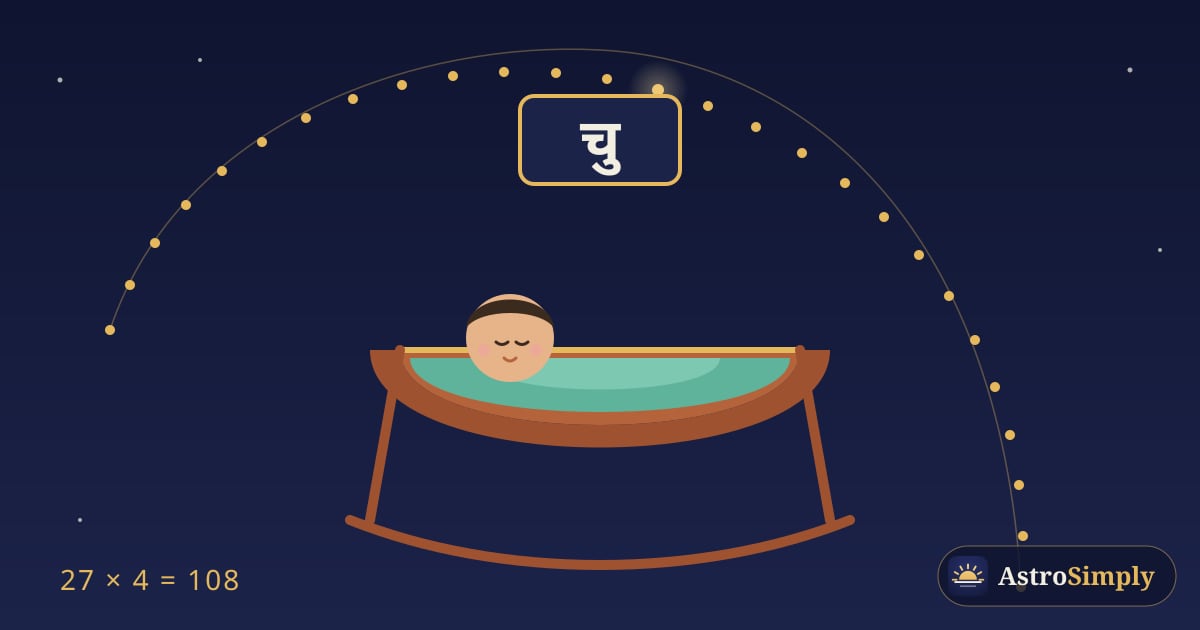
Baby name by nakshatra: the 108 pada syllables and how to use them
How Namakaran picks a baby's first syllable from the Moon's nakshatra and pada. The full table of 108 letters, a worked example, regional customs, odd sounds.
Mangal dosha: how to check your own kundali, and when it cancels
Which houses of Mars count as Mangal dosha, why you must check from lagna, Moon and Venus, the accepted cancellations, and what the dosha does not mean.