Born in Moola nakshatra: what Ganda Moola means and what it doesn't
Moola is one of six Ganda Moola nakshatras. What the Jyeshtha junction means, the pada-wise tradition, the 27th-day shanti, and what else to read in the chart.
A child born with the Moon in Moola nakshatra is born in one of the six Ganda Moola nakshatras, and tradition asks for a simple shanti ritual around the 27th day after birth, when the Moon returns to the same star. That is the whole of what the custom requires. It does not mean the child is unlucky, cursed or a danger to anyone, and Drik Panchang’s own page on the subject says plainly that not all individuals born in these nakshatras experience the difficulties attached to them.
If a pandit or a relative has frightened you with the word “Moola”, this post is for you. Here is what the nakshatra is, why it got its reputation, what the tradition actually asks, and what to look at in the rest of the chart.
What Moola is
Moola is the 19th nakshatra, covering the first 13°20’ of Dhanu (Sagittarius). Its ruler in the Vimshottari scheme is Ketu, its presiding deity is Nirriti, and its symbol is a bundle of tied roots, sometimes an elephant goad. The name means “root”. The stars behind it lie towards the centre of our galaxy, in the tail of the Scorpion as the sky is drawn, which is partly why the old texts gave it a reputation for reaching the bottom of things.
People born here are often described as investigators: philosophical, curious, unwilling to accept a surface explanation. They dig. That tendency is a gift in research, medicine, law, spirituality and any work that requires getting to a root cause, and it is a strain in situations that reward leaving things alone.
Why it is called Ganda Moola
Six nakshatras carry the Ganda Moola label: Ashwini, Ashlesha, Magha, Jyeshtha, Moola and Revati. Look at where they sit and the pattern is obvious. They are the nakshatras on either side of the three places where a water sign meets a fire sign:
| Junction | Ending nakshatra (water sign) | Starting nakshatra (fire sign) |
|---|---|---|
| Karka to Simha | Ashlesha | Magha |
| Vrishchika to Dhanu | Jyeshtha | Moola |
| Meena to Mesha | Revati | Ashwini |
Each of these junctions is a gandanta, a knot. At these three points a sign boundary and a nakshatra boundary fall on the same degree, which happens nowhere else in the zodiac. The Moon changes both its sign and its star at once, and classical astrology treats that double change as a sensitive, unsettled moment. Moola in particular begins exactly at 0° Dhanu, so its first pada is the gandanta zone proper, usually taken as the first 3°20’ of the sign. The further the Moon is from the junction, the weaker the gandanta effect. A Moon at 11° Dhanu is in Moola but a long way from the knot.
The pada-wise tradition
Older practice attaches a different concern to each quarter of Moola. Hindupad and Drik Panchang describe the tradition like this:
- Pada 1 (0° to 3°20’ Dhanu): the sensitive gandanta zone; traditionally linked to the father, and the pada for which shanti is most insisted upon.
- Pada 2 (3°20’ to 6°40’): traditionally linked to the mother; shanti recommended.
- Pada 3 (6°40’ to 10°): traditionally linked to loss of wealth.
- Pada 4 (10° to 13°20’): held to carry no dosha at all.
We repeat this because you will hear it, not because a single pada decides anything. These are old rules of thumb for a quick reading, and they have to be weighed against the whole chart. The Drik Panchang page lists these family concerns and in the same breath states that they are not deterministic and vary by pada, aspects and the overall horoscope.
What the tradition asks: the 27th-day shanti
The remedy prescribed is the Moola Shanti or Ganda Moola Shanti, done when the Moon returns to the birth nakshatra, which is about 27 days after birth. If that day is missed, the same nakshatra in a later month is used. In most families it is a short puja at home or in a temple, with recitation for the nakshatra’s deity, a small havan, and some charity. Drik Panchang lists shanti puja, nakshatra homa, mantras and charity as the traditional elements.
Two points of proportion. First, this is a modest, one-time rite that families across India have done for centuries; it is not an emergency and it does not need to be expensive. Second, it is optional. A family that does not keep this custom is not neglecting the child. If you want to do it, a local temple will do it simply; nobody needs a package deal.
What else to look at in the chart
A newborn’s chart has far more in it than the Moon’s nakshatra. If you want a sensible reading, ask the pandit, or check in the AstroSimply app, for these:
- The Moon’s degree. Is it in the first pada near 0° Dhanu, or deep in the nakshatra? That alone changes how much weight the gandanta deserves.
- Jupiter’s condition. Jupiter rules Dhanu and is therefore the dispositor of a Moola Moon. A well-placed Jupiter, in its own sign, exalted in Karka, or in a kendra, is the classical support for this Moon.
- Ketu’s placement. Ketu rules the nakshatra. Where it sits and what aspects it says a lot about how the digging temperament will express itself.
- The lagna and its lord. The child’s constitution and life direction come from here, not from the Moon’s star.
- The dasha at birth. A Moola birth starts life in a Ketu mahadasha of up to seven years, after which Venus runs for twenty. Knowing how much Ketu remains tells you when the early phase ends. Our guide to the Vimshottari dasha explains how this is calculated.
A worked example
A baby girl is born in Lucknow with the Moon at 1°50’ Dhanu. That is Moola, first pada, inside the gandanta zone, and the family’s pandit, quite correctly, suggests a Moola Shanti on the 27th day. The grandmother is anxious because she has heard the first pada “affects the father”.
Here is a more complete reading. Jupiter, the dispositor, is in Karka, its sign of exaltation, in the 9th house from the lagna, the house of the father. Ketu sits in the 3rd house with no planet aspecting it. The lagna lord is strong. On this evidence an experienced astrologer would say: the Moon is at a sensitive point, the shanti is appropriate and the family should do it with a quiet mind, and the chart’s main planetary supports are good. That reading is honest about the gandanta and refuses to turn it into a prophecy. It also gives the family something to do that is proportionate: a short puja, and then getting on with raising their daughter.
A common misunderstanding
“The father should not see the child’s face until the shanti.” This custom exists in some regions, and it causes real distress to new parents. Neither Drik Panchang nor Shubh Panchang mentions it as part of the Ganda Moola tradition, and nothing in the standard nakshatra material requires it. If your family keeps the custom, that is your choice; if it is being pressed on you as a rule of jyotish, it is not one. A father meeting his newborn is not an astrological event.
Frequently asked questions
Is Moola bad for marriage muhurat and other work, or only for births?
Drik Panchang’s nakshatra page describes Moola as neutral for most auspicious activities. Many pandits avoid the Ganda Moola nakshatras for weddings and housewarmings, and the tradition is strongest about the junction degrees rather than the whole nakshatra. For a newborn, the concern is the Moon’s position, not the day’s nakshatra in general.
My own Moon is in Moola and nobody did a shanti. Should I do one now?
The 27th-day shanti is specific to infancy. An adult with a Moola Moon who has never done it has lost nothing; the practical equivalent is to understand how the nakshatra shows in your temperament and dashas. If you still wish to do something, a simple puja on a day when the Moon is in Moola is the traditional choice, and that is entirely optional.
Does Ganda Moola apply if the Moon is in Moola but the lagna is elsewhere?
Yes. Ganda Moola is a statement about the Moon’s nakshatra at birth, not the lagna. A child with Dhanu lagna but the Moon in, say, Rohini is not Ganda Moola; a child with Karka lagna and the Moon in Moola is. If you are not sure which sign and star your Moon occupies, our post on understanding your Moon sign explains how to find it.
Sources
Read next
Baby name by nakshatra: the 108 pada syllables and how to use them
How Namakaran picks a baby's first syllable from the Moon's nakshatra and pada. The full table of 108 letters, a worked example, regional customs, odd sounds.
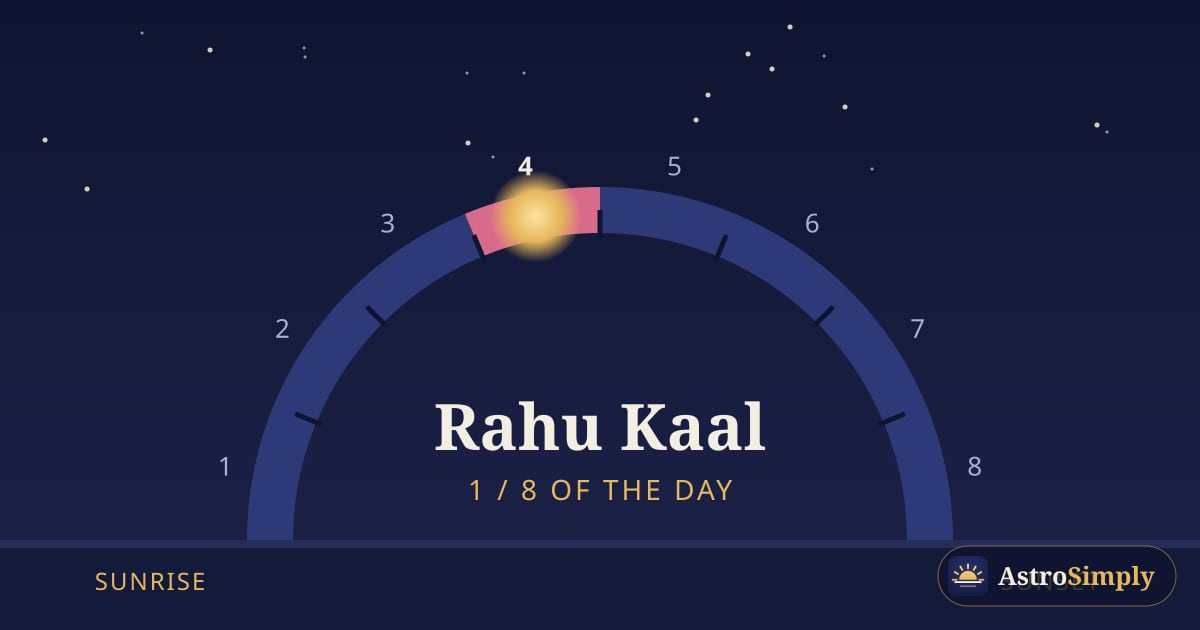
Rahu kaal: how it is calculated for your city, and what it is for
Rahu kaal is one eighth of the daylight, chosen by the weekday. The arithmetic with a real day, the weekday table, where it comes from, what it doesn't stop.
Ravi Pushya on 1 November 2026: the shopping day before Dhanteras
Ravi Pushya yoga falls on Sunday 1 November 2026, five days before Dhanteras. The window, the best Choghadiya, Rahu kaal to skip, and what people buy.